Reducing friction in AI-driven fitness planning

FitFuel 2026

Impact: Reduced taps to adapt a workout from 9 to 5

Role: Project Lead (Experience Designer)
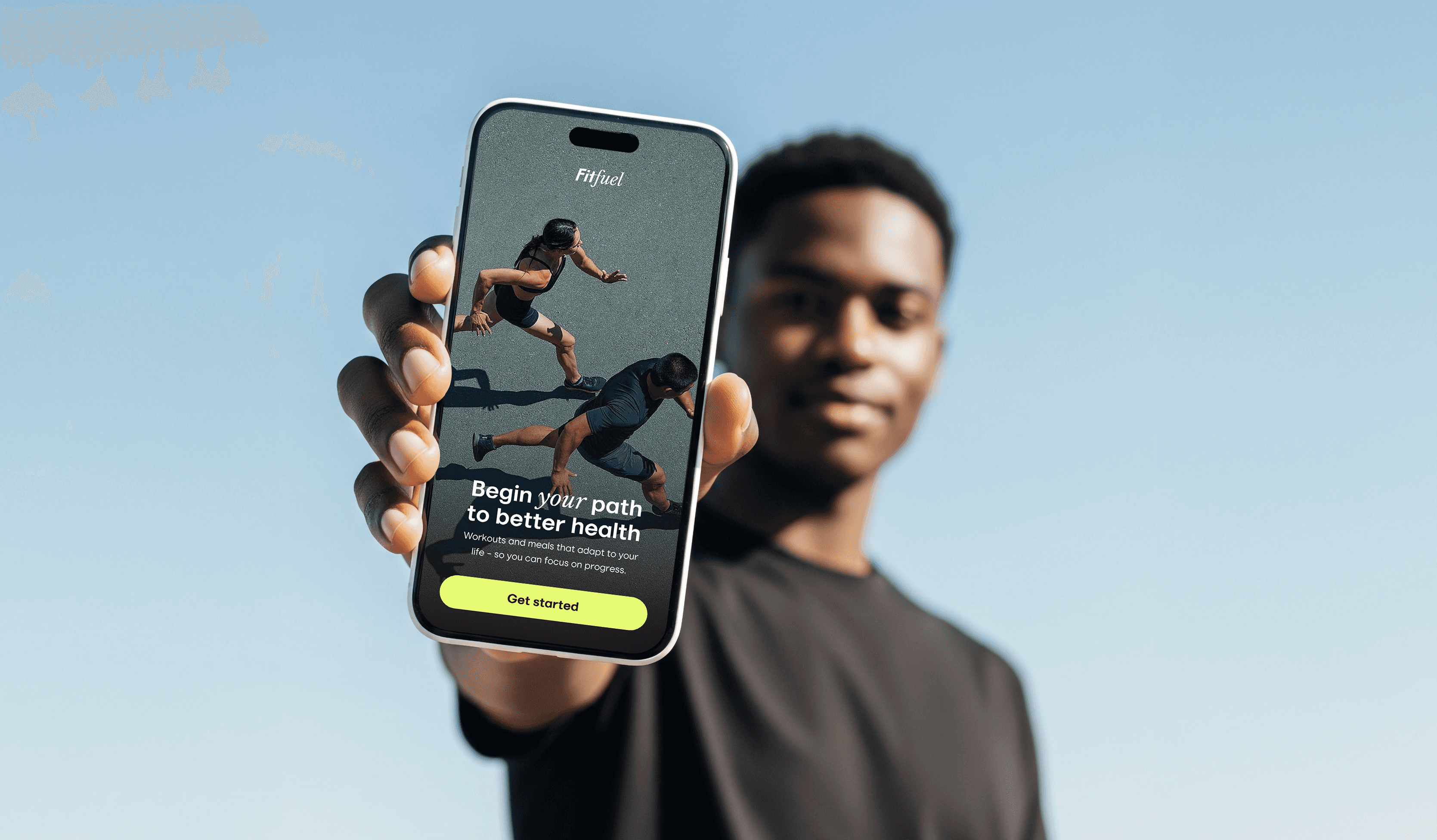
Reducing friction in AI-driven fitness planning

FitFuel 2026

Impact: Reduced taps to adapt a workout from 9 to 5

Role: Project Lead (Experience Designer)

Reducing friction in AI-driven fitness planning

HeyClass 2023

Impact: Reduced taps to adapt a workout from 9 to 5

Role: Project Lead (Experience Designer)

Reducing friction in AI-driven fitness planning

FitFuel 2026

Impact: Reduced taps to adapt a workout from 9 to 5

Role: Project Lead (Experience Designer)

OVERVIEW

An AI-augmented design workflow

OVERVIEW

An AI-augmented design workflow

OVERVIEW

An AI-augmented design workflow

This project was completed as part of a 4-week course, AI for UX Design, with DesignLab. The curriculum focused on meaningfully integrating AI tools to accelerate the end-to-end design process.

FitFuel was the hypothetical client – an AI-powered fitness and nutrition app designed for busy professionals (25-45) with varying fitness levels and tech confidence. 

The course required exploration across the full product lifecycle: Branding, Marketing, Research, UX, Testing, and Launch. This case study zooms in on one part of that – an AI-powered usability test on the workout recommendation and completion flow.
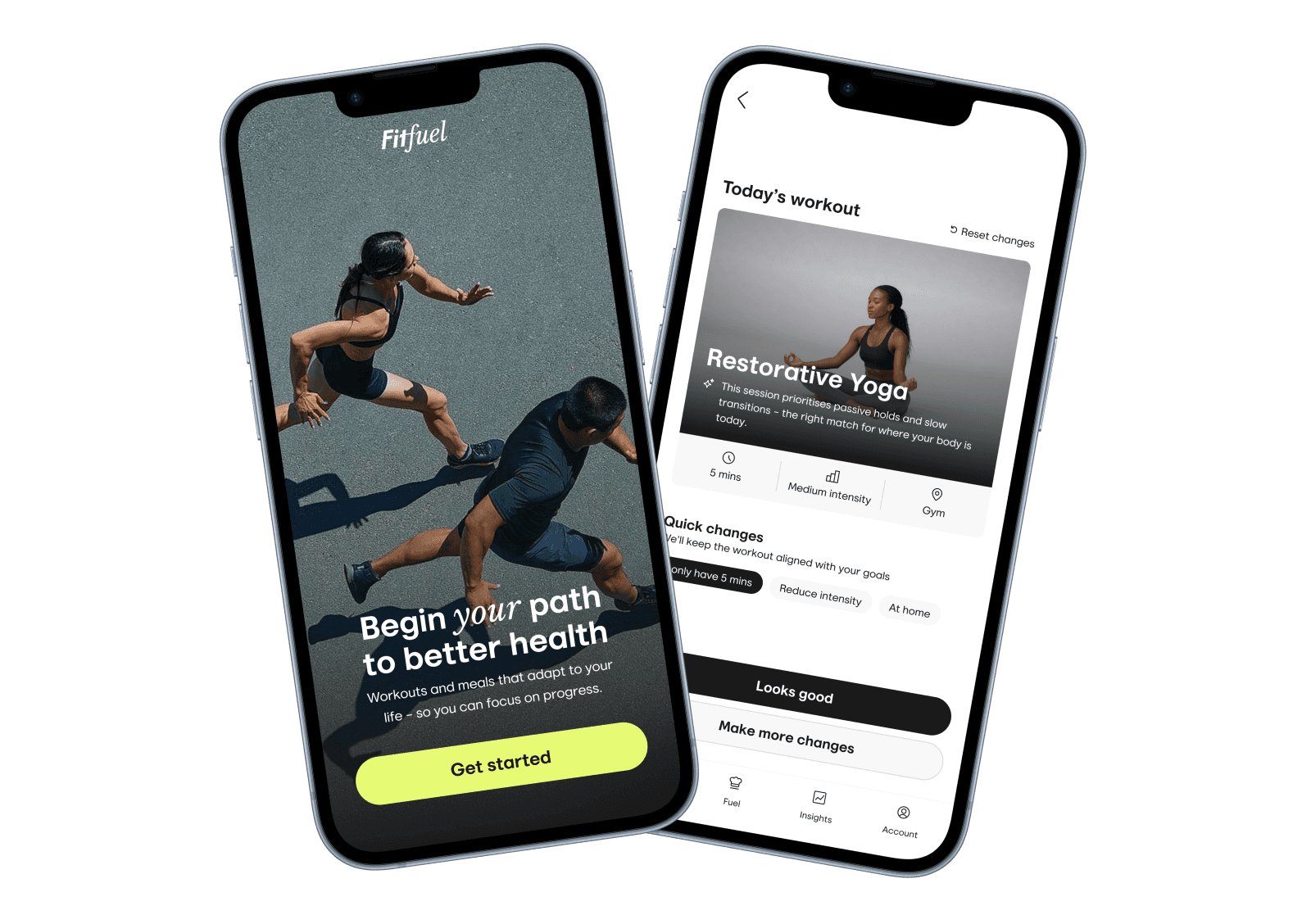
This project was completed as part of a 4-week course, AI for UX Design, with DesignLab. The curriculum focused on meaningfully integrating AI tools to accelerate the end-to-end design process.

FitFuel was the hypothetical client – an AI-powered fitness and nutrition app designed for busy professionals (25-45) with varying fitness levels and tech confidence. 

The course required exploration across the full product lifecycle: Branding, Marketing, Research, UX, Testing, and Launch. This case study zooms in on one part of that – an AI-powered usability test on the workout recommendation and completion flow.

This project was completed as part of a 4-week course, AI for UX Design, with DesignLab. The curriculum focused on meaningfully integrating AI tools to accelerate the end-to-end design process.

FitFuel was the hypothetical client – an AI-powered fitness and nutrition app designed for busy professionals (25-45) with varying fitness levels and tech confidence. 

The course required exploration across the full product lifecycle: Branding, Marketing, Research, UX, Testing, and Launch. This case study zooms in on one part of that – an AI-powered usability test on the workout recommendation and completion flow.

SITUATION

Existing health apps are built for perfect weeks... not real ones

SITUATION

Existing health apps are built for perfect weeks... not real ones

SITUATION

Existing health apps are built for perfect weeks... not real ones

Health apps assume a level of predictability that most people's lives simply don't have. Schedules shift, energy fluctuates, and what worked on Monday doesn't always work on Thursday.

A review analysis of 20,000 app reviews reflected this frustration, with lack of customisation and personalisation emerging as one of the most recurring complaints among health app users.²

Despite being a well-documented pain point, the majority of health apps still deliver a static plan regardless of where a user is at on any given day. Research found that only 10-15% of fitness apps offer adaptive features or personalised progression.³

FitFuel was designed to close that gap.

Health apps assume a level of predictability that most people's lives simply don't have. Schedules shift, energy fluctuates, and what worked on Monday doesn't always work on Thursday.

A review analysis of 20,000 app reviews reflected this frustration, with lack of customisation and personalisation emerging as one of the most recurring complaints among health app users.²

Despite being a well-documented pain point, the majority of health apps still deliver a static plan regardless of where a user is at on any given day. Research found that only 10-15% of fitness apps offer adaptive features or personalised progression.³

FitFuel was designed to close that gap.

Health apps assume a level of predictability that most people's lives simply don't have. Schedules shift, energy fluctuates, and what worked on Monday doesn't always work on Thursday.

A review analysis of 20,000 app reviews reflected this frustration, with lack of customisation and personalisation emerging as one of the most recurring complaints among health app users.²

Despite being a well-documented pain point, the majority of health apps still deliver a static plan regardless of where a user is at on any given day. Research found that only 10-15% of fitness apps offer adaptive features or personalised progression.³

FitFuel was designed to close that gap.

Our mission is to help people improve their health through fitness and nutrition guidance that adapts to their goals, abilities, and circumstances at every stage of their journey – so they can focus their energy on progress, not planning.

COMPLICATION

Balancing personalisation with effort

COMPLICATION

Balancing personalisation with effort

COMPLICATION

Balancing personalisation with effort

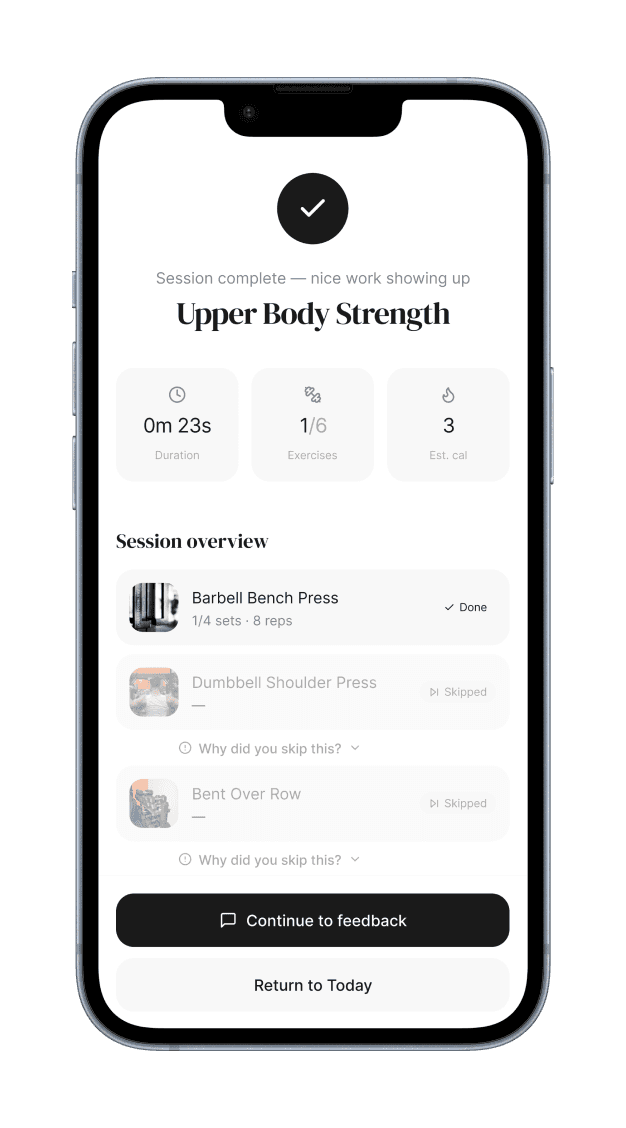
AI-powered usability testing was conducted using a prompt in Figma Make, grounded in FitFuel’s primary personas. This surfaced a central tension in the product experience: personalisation depends on user input, but input creates friction.

The more the app tried to tailor recommendations to each user, the more it asked them to pause, think, and provide information, sometimes before they had even begun their workout. This trade-off between a smarter experience and a lighter one became a key design challenge.

Several parts of the workout recommendation and completion flow highlighted this tension.

AI-powered usability testing was conducted using a prompt in Figma Make, grounded in FitFuel’s primary personas. This surfaced a central tension in the product experience: personalisation depends on user input, but input creates friction.

The more the app tried to tailor recommendations to each user, the more it asked them to pause, think, and provide information, sometimes before they had even begun their workout. This trade-off between a smarter experience and a lighter one became a key design challenge.

Several parts of the workout recommendation and completion flow highlighted this tension.

AI-powered usability testing was conducted using a prompt in Figma Make, grounded in FitFuel’s primary personas. This surfaced a central tension in the product experience: personalisation depends on user input, but input creates friction.

The more the app tried to tailor recommendations to each user, the more it asked them to pause, think, and provide information, sometimes before they had even begun their workout. This trade-off between a smarter experience and a lighter one became a key design challenge.

Several parts of the workout recommendation and completion flow highlighted this tension.

  1. The daily check-in was designed to help FitFuel tailor workouts to a user’s circumstances by asking about their schedule, energy, and environment. In its current form, however, it required users to move through all three questions every time. For someone who only needed to adjust one factor, this created unnecessary effort and made the interaction feel more tedious than helpful.
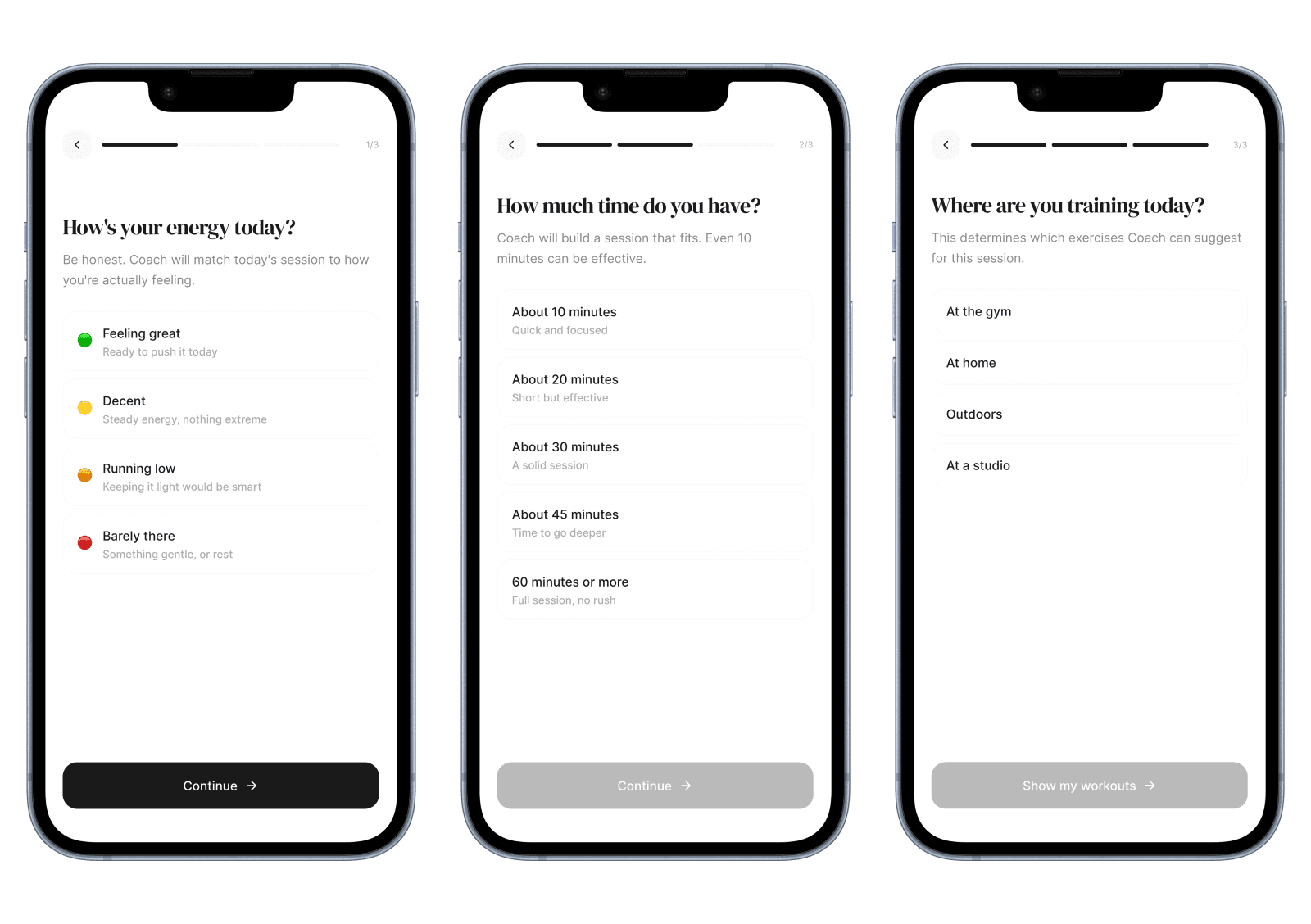
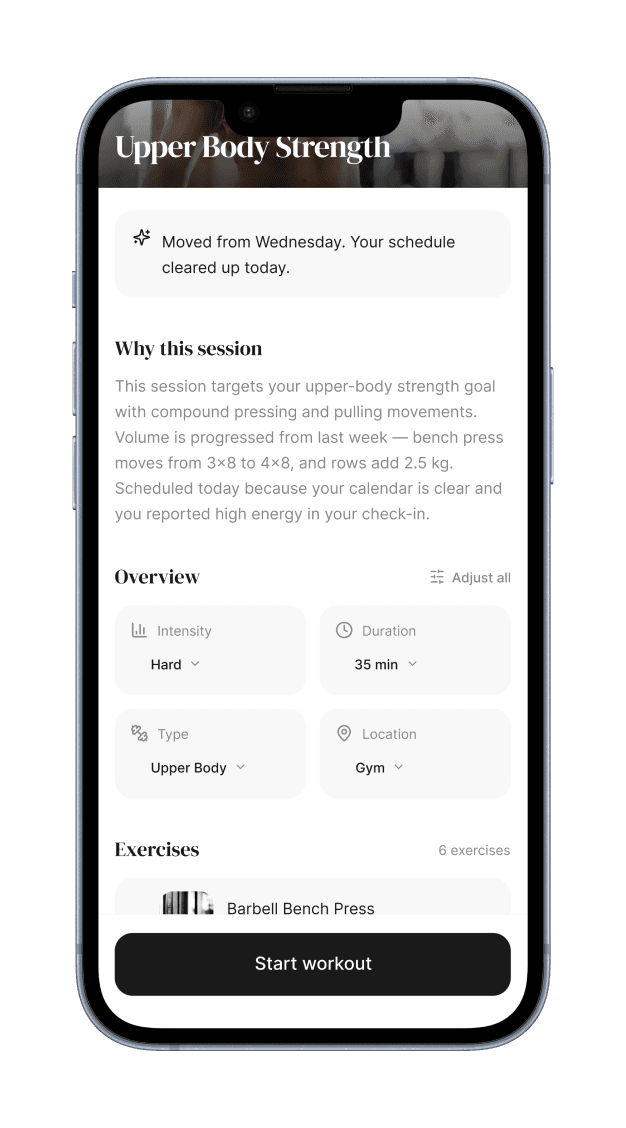
  1. The workout customisation feature offered four dropdown controls: intensity, duration, type, and location. While this gave users a high degree of control, it also required them to stop and deliberately configure their session. That level of effort felt out of step with the moment, particularly for someone already at the gym or trying to begin quickly.
  1. Post-workout feedback was valuable for improving future recommendations, but prompting reflection immediately after exercise asked too much at the point users were most likely to disengage. Although strategically useful, the timing introduced friction at a moment when motivation to interact further was likely to be low.
QUESTION

How might we support adaptive, personalised workouts without compromising simplicity or ease of use?

QUESTION

How might we support adaptive, personalised workouts without compromising simplicity or ease of use?

QUESTION

How might we support adaptive, personalised workouts without compromising simplicity or ease of use?

I defined two key design questions to guide exploration:

  1. How might we support quick, in-the-moment adjustments to a workout without disrupting the user flow?

  2. How might we gather meaningful feedback to improve personalisation, without overburdening users immediately after their workout?

I defined two key design questions to guide exploration:

  1. How might we support quick, in-the-moment adjustments to a workout without disrupting the user flow?

  2. How might we gather meaningful feedback to improve personalisation, without overburdening users immediately after their workout?

I defined two key design questions to guide exploration:

  1. How might we support quick, in-the-moment adjustments to a workout without disrupting the user flow?

  2. How might we gather meaningful feedback to improve personalisation, without overburdening users immediately after their workout?

ANSWER 1

Progressive workout control

ANSWER 1

Progressive workout control

ANSWER 1

Progressive workout control

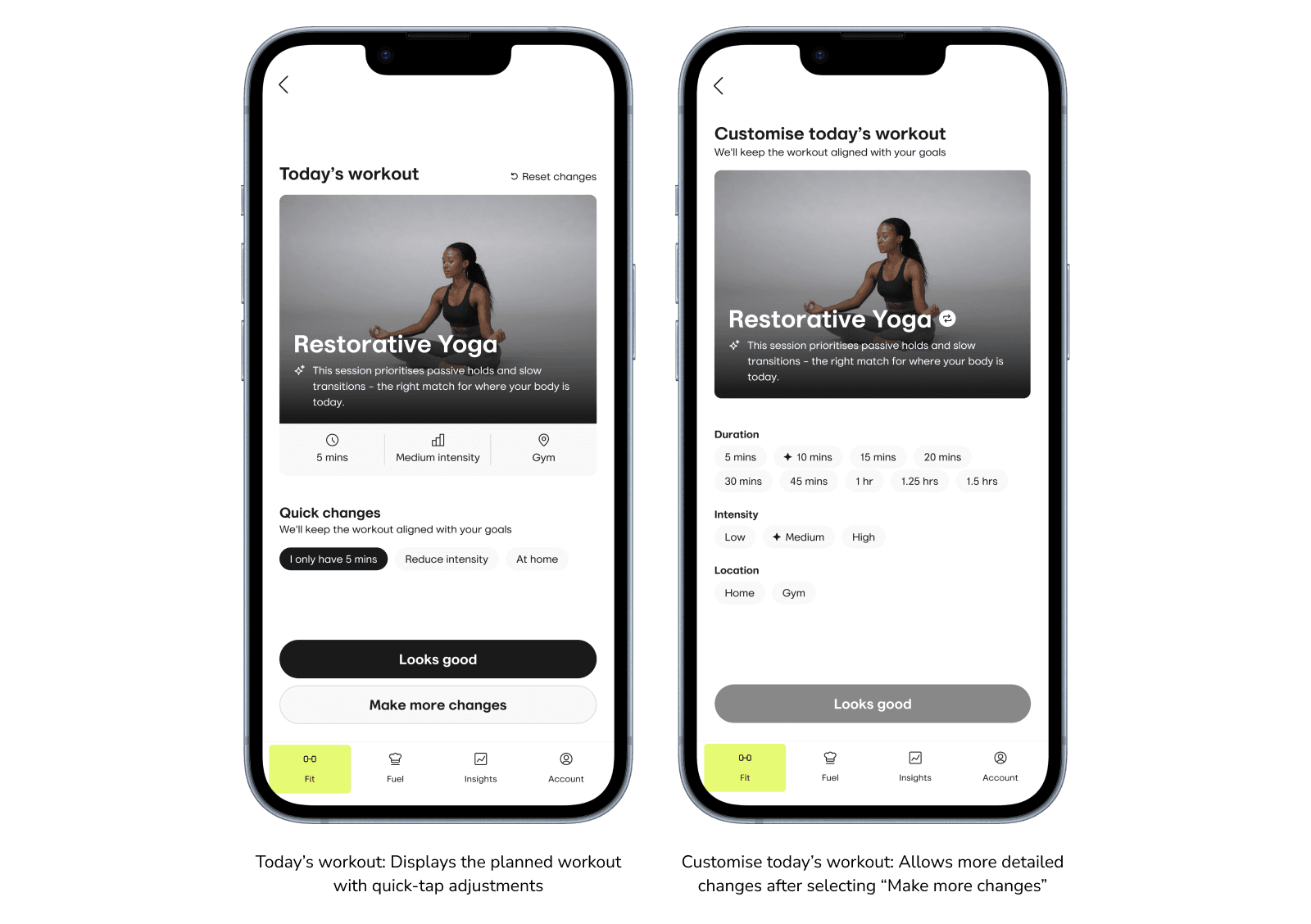
Instead of asking users to configure their workout upfront, the app presents a ready-made workout preview, already tailored to their fitness level and goals.

From there, users can:

  • Start the workout immediately, with no additional steps

  • Make quick, one-tap adjustments (e.g. reduce duration or intensity) to adapt the workout to their immediate context, then start

  • Or tap “Make more changes” to access the full set of customisation controls

This change deprioritises full customisation, making it available only when users actively choose to engage, rather than as a prerequisite to getting started.
Instead of asking users to configure their workout upfront, the app presents a ready-made workout preview, already tailored to their fitness level and goals.

From there, users can:

  • Start the workout immediately, with no additional steps

  • Make quick, one-tap adjustments (e.g. reduce duration or intensity) to adapt the workout to their immediate context, then start

  • Or tap “Make more changes” to access the full set of customisation controls

This change deprioritises full customisation, making it available only when users actively choose to engage, rather than as a prerequisite to getting started.

Instead of asking users to configure their workout upfront, the app presents a ready-made workout preview, already tailored to their fitness level and goals.

From there, users can:

  • Start the workout immediately, with no additional steps

  • Make quick, one-tap adjustments (e.g. reduce duration or intensity) to adapt the workout to their immediate context, then start

  • Or tap “Make more changes” to access the full set of customisation controls

This change deprioritises full customisation, making it available only when users actively choose to engage, rather than as a prerequisite to getting started.

ANSWER 2

Making space after the workout

ANSWER 2

Making space after the workout

ANSWER 2

Making space after the workout

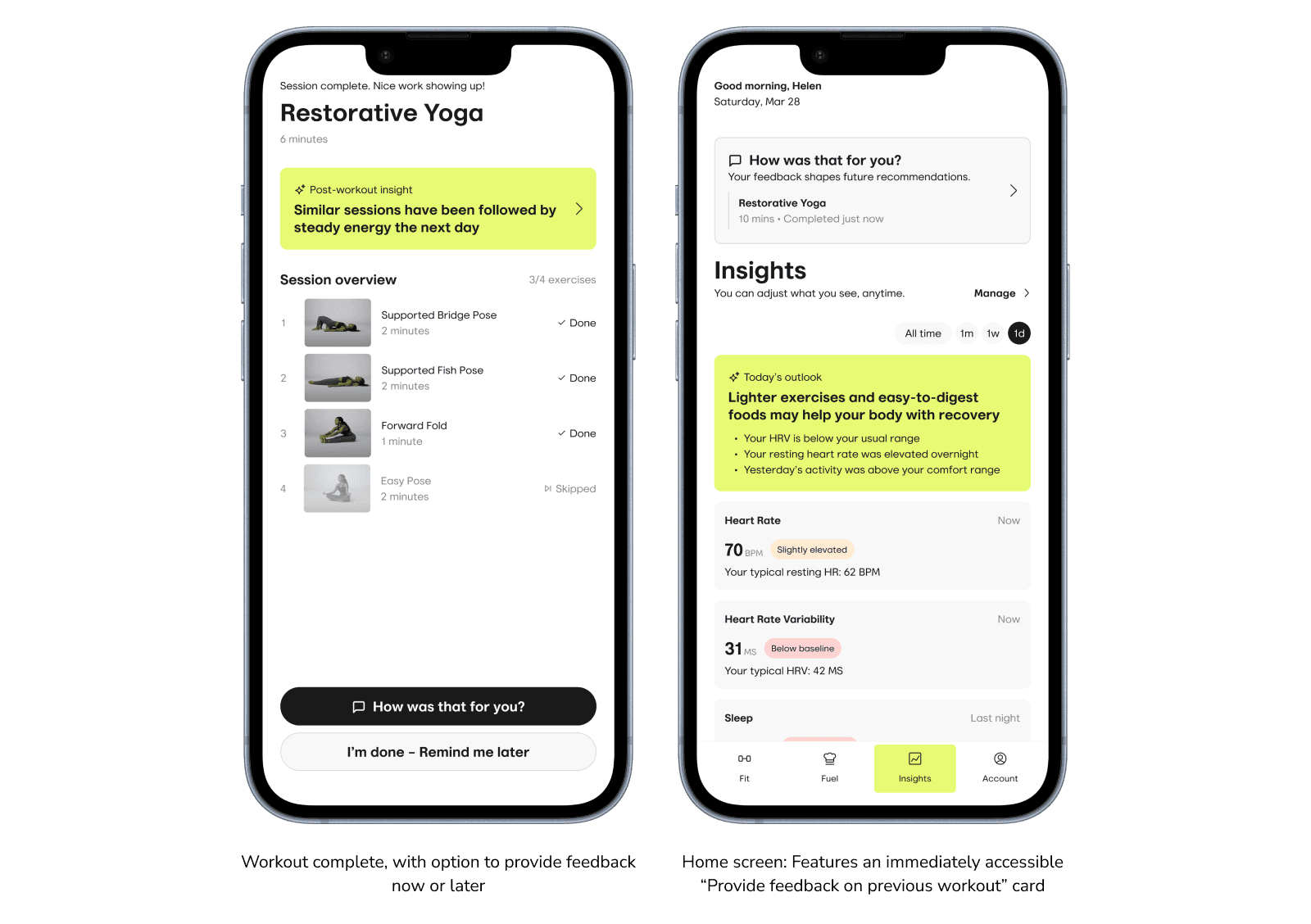
Instead of requiring feedback immediately after a workout, the experience introduces choice over when to engage.

Users can either provide feedback straight away, or select “Remind me later”.

If they choose to defer:

  • They are returned to the main insights screen

  • A lightweight prompt appears, reminding them to provide feedback, alongside details of the workout they completed 

This approach avoids placing effort on users at a low-energy moment, instead allowing them to provide more considered feedback at a time that better suits them.
Instead of requiring feedback immediately after a workout, the experience introduces choice over when to engage.

Users can either provide feedback straight away, or select “Remind me later”.

If they choose to defer:

  • They are returned to the main insights screen

  • A lightweight prompt appears, reminding them to provide feedback, alongside details of the workout they completed 

This approach avoids placing effort on users at a low-energy moment, instead allowing them to provide more considered feedback at a time that better suits them.

Instead of requiring feedback immediately after a workout, the experience introduces choice over when to engage.

Users can either provide feedback straight away, or select “Remind me later”.

If they choose to defer:

  • They are returned to the main insights screen

  • A lightweight prompt appears, reminding them to provide feedback, alongside details of the workout they completed 

This approach avoids placing effort on users at a low-energy moment, instead allowing them to provide more considered feedback at a time that better suits them.

OUTCOME

Reducing friction across the workout journey

OUTCOME

Reducing friction across the workout journey

OUTCOME

Reducing friction across the workout journey

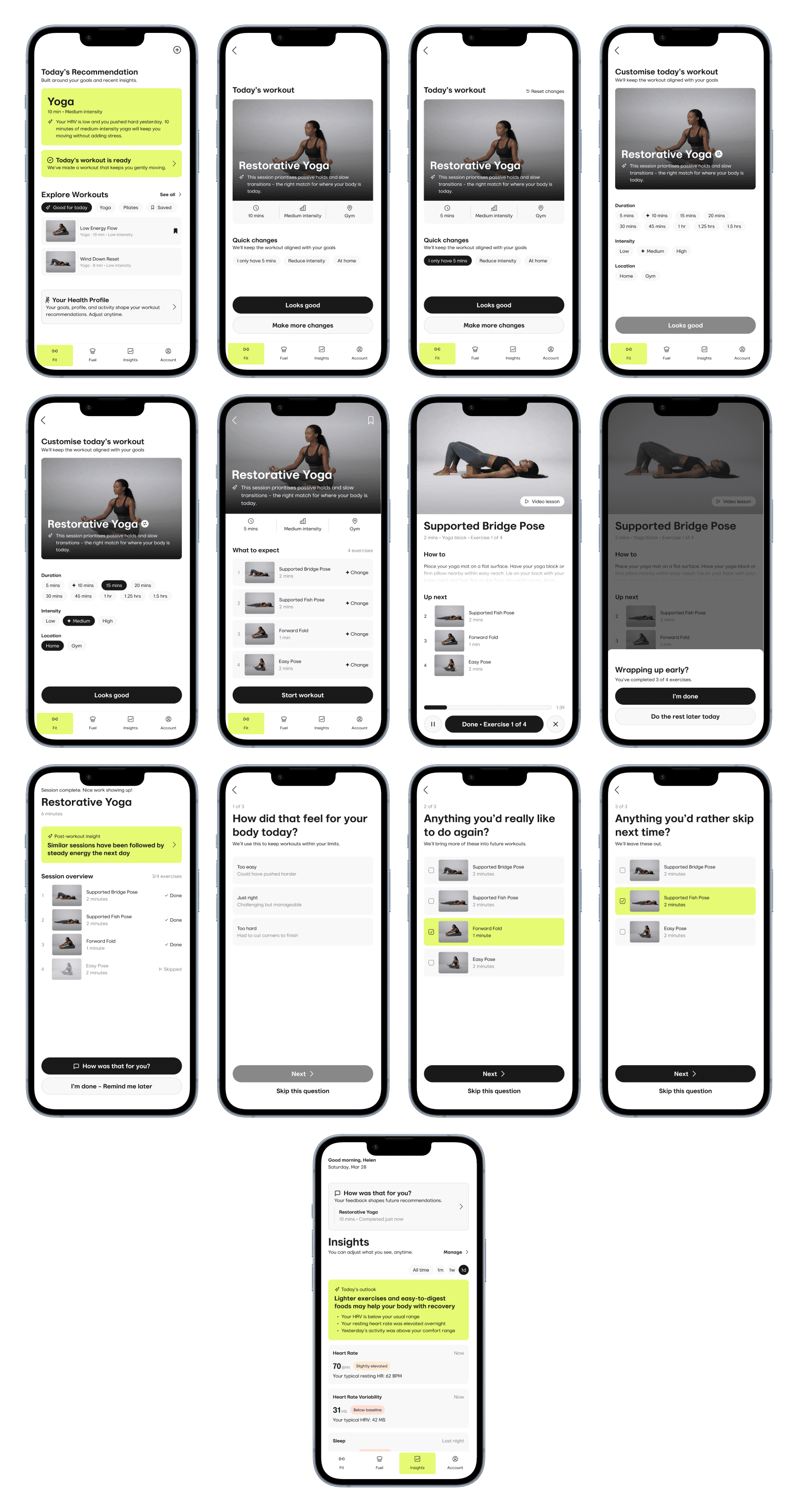
AI-powered usability testing was re-run on the updated flows to evaluate the changes.

AI-powered usability testing was re-run on the updated flows to evaluate the changes.

AI-powered usability testing was re-run on the updated flows to evaluate the changes.

Key improvements:
Key improvements:
Key improvements:
  • Reduced required taps from 9 to 5 for users to fully adapt a workout to their day.

  • Streamlined the primary flow to start a workout, separating more granular customisation from the main path.

  • Reduced friction in post-workout feedback by allowing users to defer and return at a more suitable time.
  • Reduced required taps from 9 to 5 for users to fully adapt a workout to their day.

  • Streamlined the primary flow to start a workout, separating more granular customisation from the main path.

  • Reduced friction in post-workout feedback by allowing users to defer and return at a more suitable time.

  • Reduced required taps from 9 to 5 for users to fully adapt a workout to their day.

  • Streamlined the primary flow to start a workout, separating more granular customisation from the main path.

  • Reduced friction in post-workout feedback by allowing users to defer and return at a more suitable time.

KEY LEARNINGS

If you don’t know what you need, AI won’t either

If you don’t know what you need, AI won’t either

KEY LEARNINGS

If you don’t know what you need, AI won’t either

A key learning from this project was the importance of understanding what is needed at each stage of the design process – and being intentional about how AI is used to support that need.

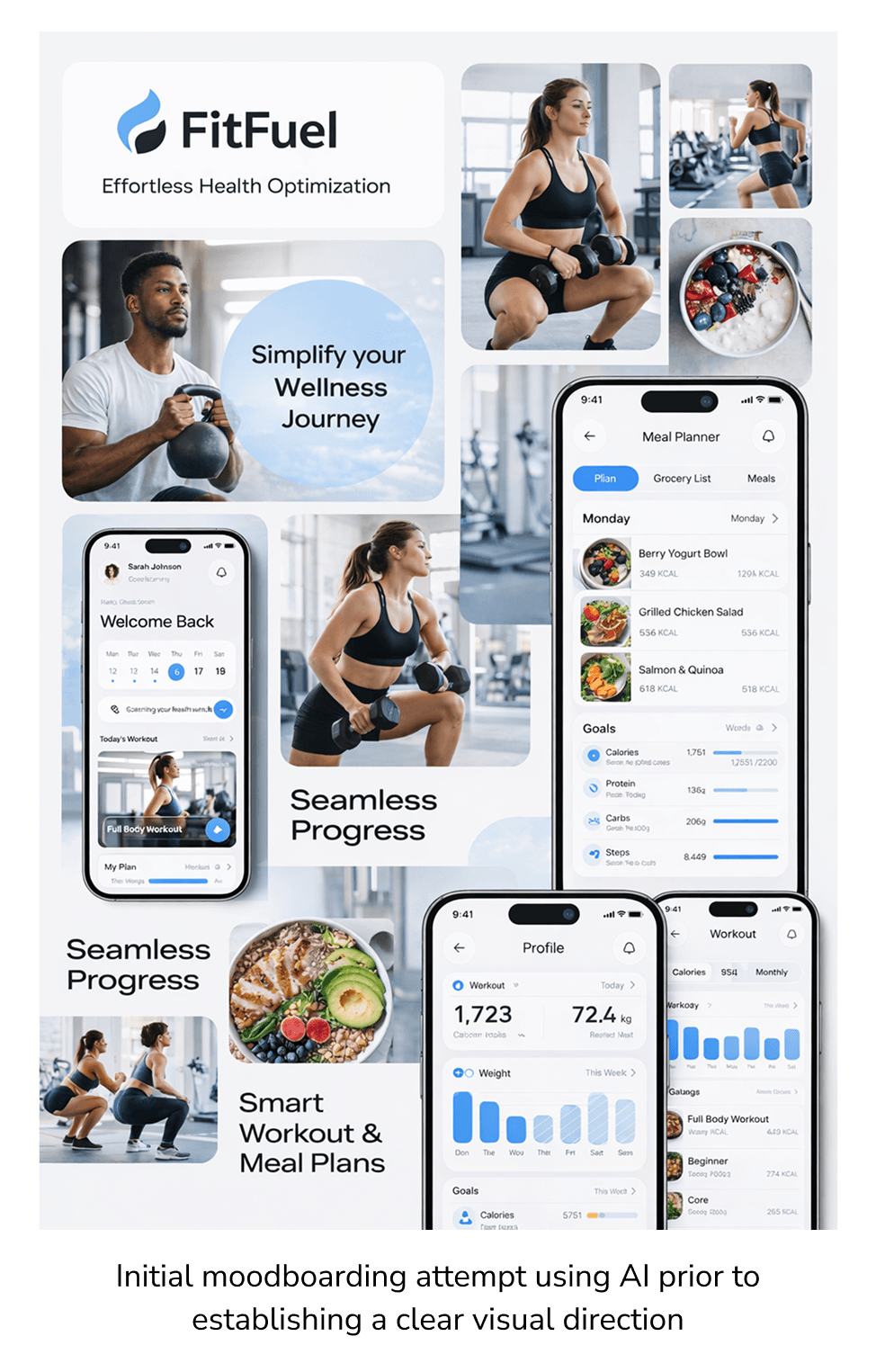
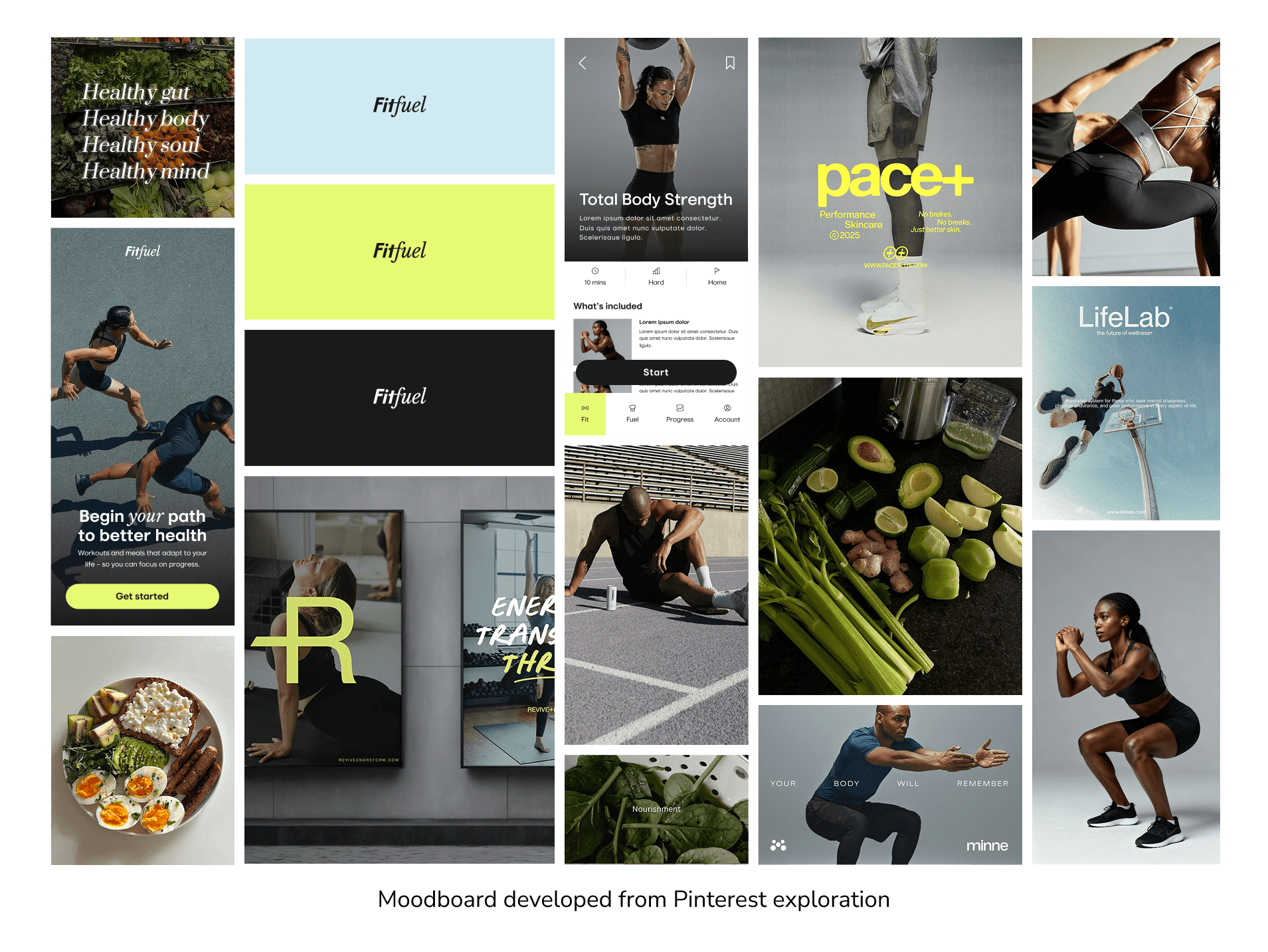
There were moments where AI was introduced too early, or used in situations where it wasn’t the right tool. For example, attempting to generate a moodboard before establishing a clear visual direction made it harder, not easier, to move forward.

The purpose of a moodboard is to develop a visual direction — not just represent one. Using AI at this stage meant relying on vague prompts to generate something cohesive, which often resulted in outputs that felt generic or misaligned. In contrast, manually exploring references (e.g. through Pinterest) made it easier to notice patterns, build taste, and gradually define what the direction should be.
A key learning from this project was the importance of understanding what is needed at each stage of the design process – and being intentional about how AI is used to support that need.

There were moments where AI was introduced too early, or used in situations where it wasn’t the right tool. For example, attempting to generate a moodboard before establishing a clear visual direction made it harder, not easier, to move forward.

The purpose of a moodboard is to develop a visual direction — not just represent one. Using AI at this stage meant relying on vague prompts to generate something cohesive, which often resulted in outputs that felt generic or misaligned. In contrast, manually exploring references (e.g. through Pinterest) made it easier to notice patterns, build taste, and gradually define what the direction should be.

A key learning from this project was the importance of understanding what is needed at each stage of the design process – and being intentional about how AI is used to support that need.

There were moments where AI was introduced too early, or used in situations where it wasn’t the right tool. For example, attempting to generate a moodboard before establishing a clear visual direction made it harder, not easier, to move forward.

The purpose of a moodboard is to develop a visual direction — not just represent one. Using AI at this stage meant relying on vague prompts to generate something cohesive, which often resulted in outputs that felt generic or misaligned. In contrast, manually exploring references (e.g. through Pinterest) made it easier to notice patterns, build taste, and gradually define what the direction should be.

This reinforced the principle of GIGO (“garbage input, garbage output”), with an added layer: strong input depends on having enough understanding to guide the tool effectively

This reinforced the principle of GIGO (“garbage input, garbage output”), with an added layer: strong input depends on having enough understanding to guide the tool effectively

This reinforced the principle of GIGO (“garbage input, garbage output”), with an added layer: strong input depends on having enough understanding to guide the tool effectively

Resources

Resources

Resources

¹ Direito, A., Jiang, Y., Whittaker, R., & Maddison, R. (2017). Apps for improving fitness and increasing physical activity among young people: The AIMFIT pragmatic randomized controlled trial. Journal of Medical Internet Research, 19(8), e210. https://doi.org/10.2196/jmir.7573

² Schoeppe, S., Alley, S., Van Lippevelde, W., Bray, N. A., Williams, S. L., Duncan, M. J., & Vandelanotte, C. (2016). Efficacy of interventions that use apps to improve diet, physical activity and sedentary behaviour: A systematic review. International Journal of Behavioral Nutrition and Physical Activity, 13(127). https://doi.org/10.1186/s12966-016-0454-y

³ Stach, T., et al. (2020). Classifying user reviews of mobile health apps: A systematic approach. JMIR mHealth and uHealth, 8(3), e14387. https://doi.org/10.2196/14387

¹ Direito, A., Jiang, Y., Whittaker, R., & Maddison, R. (2017). Apps for improving fitness and increasing physical activity among young people: The AIMFIT pragmatic randomized controlled trial. Journal of Medical Internet Research, 19(8), e210. https://doi.org/10.2196/jmir.7573

² Schoeppe, S., Alley, S., Van Lippevelde, W., Bray, N. A., Williams, S. L., Duncan, M. J., & Vandelanotte, C. (2016). Efficacy of interventions that use apps to improve diet, physical activity and sedentary behaviour: A systematic review. International Journal of Behavioral Nutrition and Physical Activity, 13(127). https://doi.org/10.1186/s12966-016-0454-y

³ Stach, T., et al. (2020). Classifying user reviews of mobile health apps: A systematic approach. JMIR mHealth and uHealth, 8(3), e14387. https://doi.org/10.2196/14387

¹ Direito, A., Jiang, Y., Whittaker, R., & Maddison, R. (2017). Apps for improving fitness and increasing physical activity among young people: The AIMFIT pragmatic randomized controlled trial. Journal of Medical Internet Research, 19(8), e210. https://doi.org/10.2196/jmir.7573

² Schoeppe, S., Alley, S., Van Lippevelde, W., Bray, N. A., Williams, S. L., Duncan, M. J., & Vandelanotte, C. (2016). Efficacy of interventions that use apps to improve diet, physical activity and sedentary behaviour: A systematic review. International Journal of Behavioral Nutrition and Physical Activity, 13(127). https://doi.org/10.1186/s12966-016-0454-y

³ Stach, T., et al. (2020). Classifying user reviews of mobile health apps: A systematic approach. JMIR mHealth and uHealth, 8(3), e14387. https://doi.org/10.2196/14387

Thanks for coming by!

I’m always up for connecting with new people, so feel free to get in touch.

Thanks for coming by!

I’m always up for connecting with new people, so feel free to get in touch.

Thanks for coming by!

I’m always up for connecting with new people, so feel free to get in touch.